Learning Pilates well enough to teach it
Learning an exercise and learning to teach an exercise are not the same thing.
That became clear to me very early in Pilates teacher training. I could read an exercise in my manual, understand the general movement and still stumble the first time I tried to say the cues out loud. The words were there on the page, but connecting those words to a moving body was an entirely different skill.
For me, learning to teach required seeing the exercise, feeling it, reading it, practicing it and then doing all of those things again. The information in the manuals mattered, but the repetition was what started turning that information into something I could actually use.
The manuals were only the beginning
I started my comprehensive teacher training in March, my Allegro 2 arrived in July, and I didn’t complete my full certification until January. That meant there were several months when I was learning Reformer work without having a Reformer sitting in my house waiting for me.
So I practiced however I could.
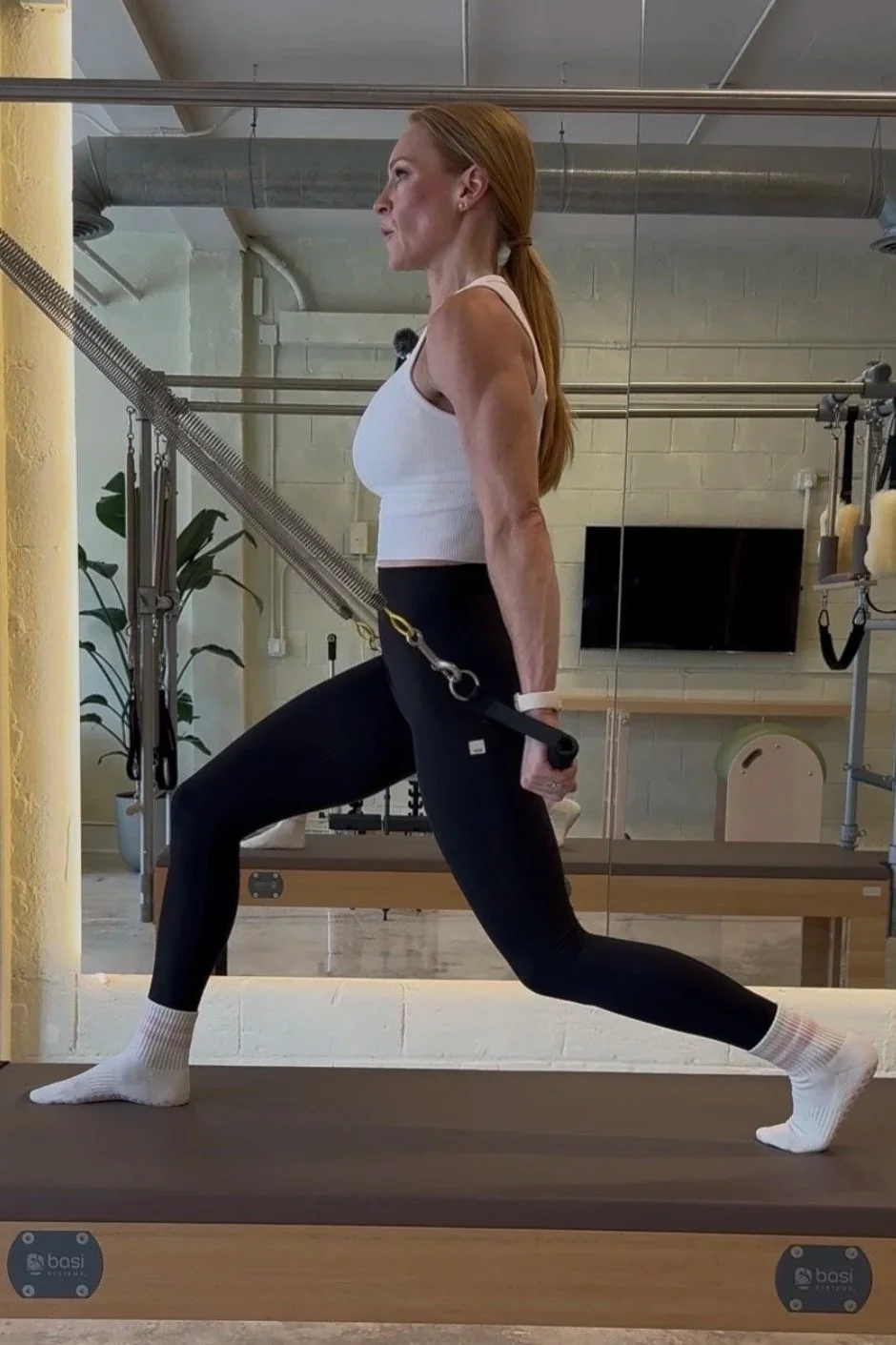
I practiced Mat at home. Before my Reformer arrived, I would sometimes rehearse the movements from Reformer exercises on the floor so I could work through the movement, say the cues out loud, and think about what my body was supposed to be doing. Otherwise, I was in the studio working on the reformer to feel the real work in my body. Chair and Tower/Cadillac practice meant going back to the studio, which I did frequently when we got to those sections.
I would bring my training manual, leave it open beside the equipment and work through the repertoire exercise by exercise. I wasn’t trying to get through an entire workout. I was studying one movement at a time and testing what I had learned in my own body.
As I moved, I would say the cue that belonged with that particular part of the exercise.
That became one of the most useful ways I practiced. Instead of sitting with a manual and trying to memorize a paragraph, I connected the language to the movement. When my body moved into one part of the exercise, I practiced the cue that belonged there. Then I moved into the next part and practiced what I would need to say next.
In the classroom part of training, the first time through each of the exercises . . . sounded completely unnatural coming out of my mouth. I understood the words when watching the master trainer and when I read them in my head, but saying them while performing the movement was different. After hearing the cue in class, practicing the exercise and trying the language again, it would eventually begin to make sense.
My manuals became part textbook, part notebook
If I open those manuals now, there are handwritten notes on nearly every page.
I wrote down cues my master trainer used that helped something click. I added simplified ways of thinking about certain exercises. If an explanation helped me finally understand what a contraindication meant or why a particular setup mattered, I wrote that down too.
Those notes became part of how I processed the material.
The printed manual gave me the framework. The classroom training allowed me to see the work demonstrated and feel it in my own body. My notes captured the language and explanations that helped me understand it, and practicing gave me a chance to put all of those pieces together.
That was especially important during our review sessions, when we could be asked to teach or demonstrate a specific exercise, and later during the practical test-outs. I couldn’t depend on recognizing the exercise when I saw it written on a page. I needed to be able to set it up, perform it, explain it and teach someone else through it.
The practice I had done on my own made that possible.
My first class plans were part of the studying
When I began creating class plans, I didn’t simply write down a list of exercises.
I wrote the exercise and the spring setting. I added cues I wanted to remember. I made notes about the muscles, joints and areas of the body involved, and I thought through what each exercise was actually asking the body to do.
Class planning became another form of studying.
Before I ever stood in front of a class, I had already considered the setup, the spring, what was moving, what needed to stay stable and what I wanted to say. I could think about where a cue belonged instead of trying to remember everything once people were already moving.
That process also forced me to look beyond choreography. It wasn’t enough to know that the legs moved out and came back in, or that the arms pulled against the straps. I wanted to understand what joints were moving, what muscles were working and what the intention of the exercise was supposed to be.
Over time, I didn’t need every detail written beside every exercise. Some of that information became part of what I knew. But in the beginning, writing it all down helped me build the knowledge I would eventually rely on without the notes in front of me.
Practice changed what I understood
There is a point in teacher training when the exercises start becoming more than names on a page.
You begin to notice how a spring changes the experience of a movement. You understand why the setup matters. A cue you initially memorized starts making sense because you can finally connect it to what the body is doing. Anatomy becomes less abstract because you can feel the movement yourself and then watch it happen differently in someone else’s body.
That understanding didn’t come from reading the manual one more time. It came from moving, speaking, observing and repeating.
I still think the manuals matter. I still think the classroom matters. I would not have wanted to learn this work without either of them.
But learning Pilates well enough to teach it required something more active.
I had to see it. I had to feel it. I had to practice it.
And eventually, I had to learn how to put what I understood into words someone else could use. The great news is that, if your training is robust . . . your manuals should give you exactly where to start. You begin to find your own voice and add or take away as you need.
Before you start collecting variations and expanding beyond your training, I think you need to understand the work you were taught first. I wrote more about that in Start with the foundation before you expand.